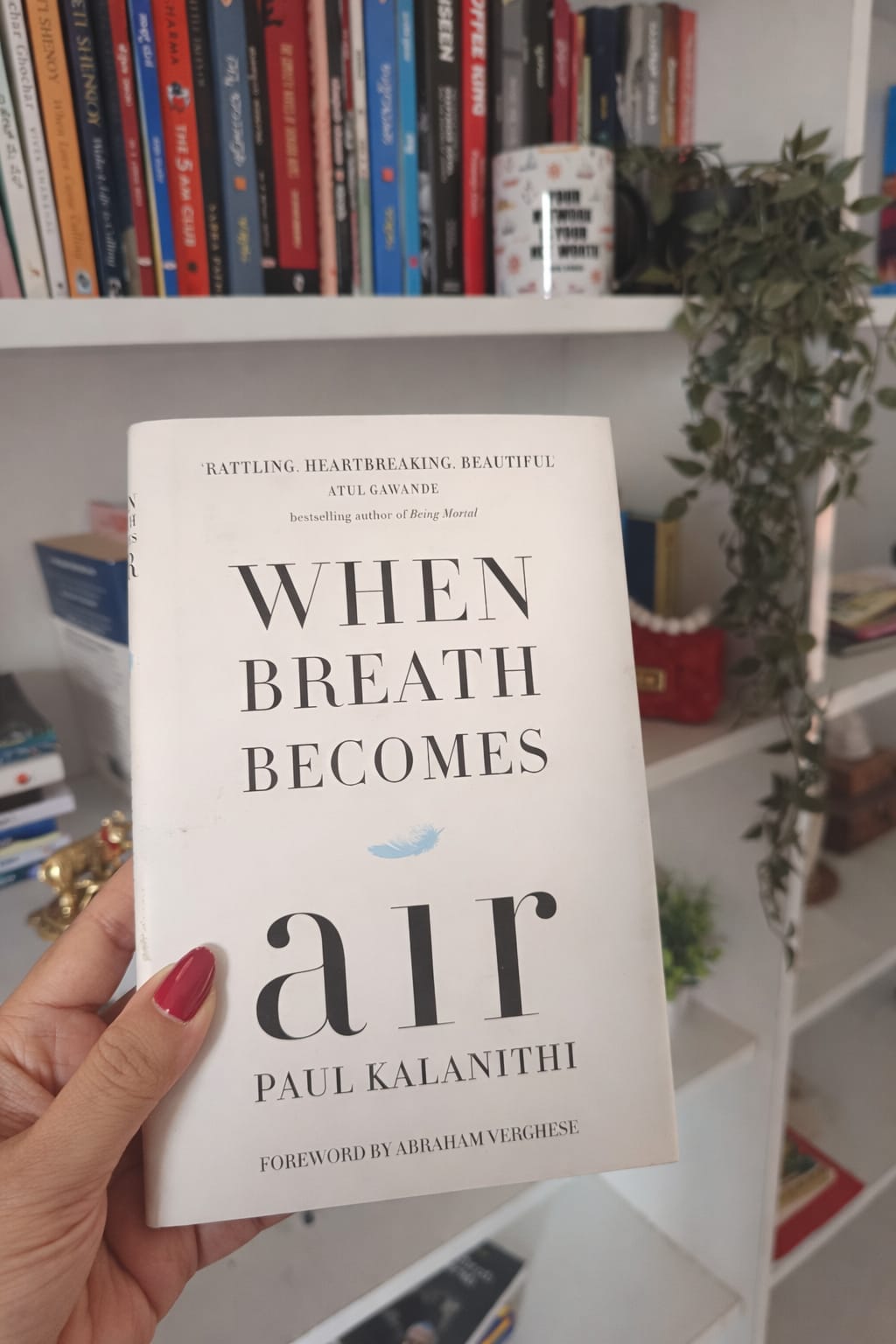
I have just finished reading this book today, and I must say it is one of the most moving books I have read in a long time. When Breath Becomes Air is not just a memoir; it is a deeply personal reflection on life, death, purpose, and the fragile nature of human existence.
Author: Paul Kalanithi
Genre: Biography / Memoir
Published: January 2016
Rating: ⭐⭐⭐⭐⭐ (5/5)
This book offers readers a rare insight into the life of a neurosurgeon and the emotional journey of a man who spent years studying the human brain and saving lives, only to find himself facing a terminal illness.
The words in this book are inspiring, philosophical, and thought-provoking. At the same time, the story is heartbreaking. It is probably the saddest yet most moving book I have read, and because of that, it is actually difficult to review it. Some books are easy to summarize, but this one carries such emotional depth that it stays with you long after the last page.
What makes this memoir so powerful is the honesty with which Paul writes about his dreams, his fears, and the pain he experienced while undergoing treatment. The book reflects his struggle to understand life even as he comes face to face with death.
The only drawback I personally felt while reading the book was the repeated use of medical terms. Since Paul was a neurosurgeon, he sometimes uses technical language when describing medical situations. A few times I had to look up these terms on Google, which slightly interrupted the reading flow. However, this does not reduce the emotional impact of the book.
Summary of the Book- When Breathe Becomes Air
Paul Kalanithi was a neurosurgeon by profession and passion. After years of intense study and training, he was completing his residency at Stanford University School of Medicine and was about to begin the career he had worked so hard for.
Paul was not just a doctor. He was also a lover of literature and philosophy. During his undergraduate years, he studied English literature and developed a deep interest in understanding the meaning of life and the nature of human existence. His love for reading and writing remained constant throughout his life.
This combination of science and literature shaped the way he viewed the world.
However, just as his career was beginning to flourish, life took a cruel and unexpected turn. At the age of 36, Paul was diagnosed with stage IV lung cancer.
In a single moment, his life changed completely.
One day he was a doctor treating patients who were facing death. The next day, he found himself sitting in the hospital as a patient, trying to understand his own diagnosis and future.
This sudden transformation from doctor to patient is one of the most powerful aspects of the memoir.
The book is divided into two main parts. The first section describes Paul’s life before his cancer diagnosis. In this part, he writes about his childhood, his education, and his journey toward becoming a neurosurgeon. He explains why he chose such a demanding profession and how he believed that understanding the human brain was also a way of understanding what makes us human.
The second section focuses on his life after the cancer diagnosis. This part is more reflective and emotional. Paul writes about undergoing treatment, adjusting to life with illness, and trying to continue working as a doctor for as long as possible.
Love, Family, and Difficult Choices
Paul and his wife, Lucy Kalanithi, had always dreamed of building a family together. But after his diagnosis, they were forced to face difficult questions about the future.
They had to decide whether it made sense to bring a child into the world while Paul’s health was uncertain. After many thoughtful conversations, they chose to move forward with their dream of becoming parents.
Their daughter, Cady, was born and brought immense joy into their lives. For Paul, becoming a father gave new meaning and purpose to the time he had left.
Sadly, Paul passed away on March 9, 2015, only eight months after his daughter was born. Yet during those final months, he continued writing and reflecting on life. This memoir stands as a powerful reminder of his courage and honesty.
The Epilogue
One of the most emotional parts of the book is the epilogue written by Lucy after Paul’s death.
Her words bring the story to a quiet and deeply moving conclusion. She reflects on Paul’s life, his character, and the transformation he experienced during his final years.
One line from the epilogue beautifully captures this:
“What happened to Paul was tragic, but he was not a tragedy.”
A Quote I Loved
One of the most beautiful lines in the book is:
“Human knowledge is never contained in one person. It grows from the relationships we create between each other and the world, and still it is never complete.”
This quote reflects Paul’s deep understanding of knowledge and human connection. It reminds us that learning and wisdom grow through our relationships with others and with the world around us.
Final Thoughts
When Breath Becomes Air is not a long book, but it carries enormous emotional depth. It gently encourages readers to think about life, ambition, purpose, and mortality.
It reminds us that life can be unpredictable and fragile, yet it can still be meaningful even in the face of suffering.
This memoir stayed in my mind long after I finished reading it. I would strongly recommend this book to anyone who enjoys thoughtful, emotional, and deeply meaningful reading.
Have you read When Breath Becomes Air?
I would love to know your thoughts about this book. Share your experience in the comments below.
If you enjoy reflective memoirs, feel free to explore more book reviews on my blog.
